
We get you off the inspection cycle, not just through it.
Rigid compliance structures slow down your supply chain, and every redundant overseas audit chips away at your bottom line. We specialize in transitioning recurring chemical imports onto KEBS's Route B registration fast-lane — legally migrating your frequent, low-risk product lines onto the authorized Destination Inspection pathway, eliminating the delays and fees of overseas pre-shipment testing on every container.
Get started — create your account →Every application follows KEBS's current PVoC Manual (v15).
Find what qualifies
We review your shipment history and HS codes to flag the frequent, low-risk product lines that qualify for KEBS's Route B fast-lane.
We handle KEBS, end to end
Our team runs the full technical application to move those lines onto KEBS Route B (Product Registration) — no generalist guesswork.
Straight to port release
Your registered shipments bypass overseas pre-export testing entirely, moving straight to local Destination Inspection.
Optimizing compliance pipelines for seamless trade.
Ashworth Partners delivers data-driven technical solutions for navigating the Kenya Bureau of Standards (KEBS) conformity assessment and registration frameworks. Our systems are engineered directly around the official regulatory architecture, allowing high-frequency chemical importers to move away from erratic, manual compliance workflows into tracked, predictable shipping cycles.
Industrial manufacturers lose substantial working capital and predictable manufacturing time by repeatedly re-earning the same conformity clearances on recurring product lines. Managing these timelines manually exposes a supply chain to missed renewal deadlines, untracked documentation lapses, and steep port demurrage costs.
Ashworth Partners structures a systematic approach that turns regulatory compliance into a commercial advantage — moving eligible cargo off Route A's per-shipment cycle and onto whichever fast-lane it actually qualifies for below.
Worked from inside the process
Route and agent recommendations come from someone who has actually worked the PVoC system from inside it, shipment after shipment — not a generalist consultant.
Nothing tracked by memory
Every application, document, and renewal deadline lives in one tracked system — not a shared spreadsheet someone has to remember to update.
One decision, two ways off Route A.
Recurring shipments default to Route A's per-container inspection. Once a product line qualifies, it moves onto Route B or Route C — and stays there, instead of repeating the same clearance on every shipment.

Every shipment inspected against the standard it has to clear.

Lab reports and technical datasheets, verified before they're submitted.
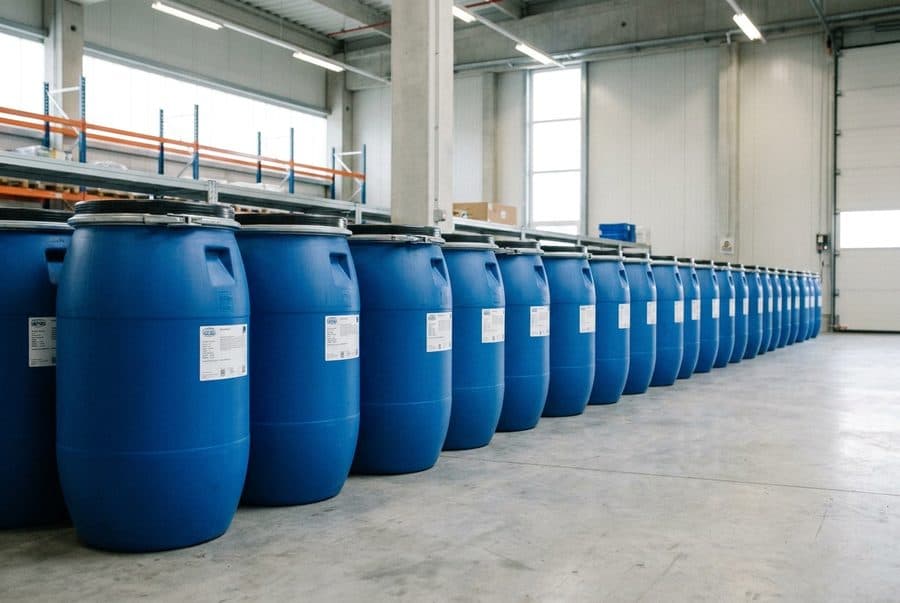
Recurring cargo, tracked through every renewal cycle.
One route through KEBS, start to renewal.
The same five stages every shipment or registration passes through — and the same team the whole way, not a handoff at submission.
Route & agent
Check the product against Appendix A, classify the HS code, decide Route A, B, or C.
Documents
Lab reports, QMS certs, MSDS, declaration of conformity — sourced and verified.
Application
Compiled and submitted to KEBS, or booked with your PVoC agent.
Evaluation
We track KEBS's review and fix issues fast if something's flagged.
Renewal
Filed 1–2 months before expiry, to keep a buffer against falling back to full PVoC.
Correct the first time
Route, agent, and document set chosen by someone who works the PVoC system from inside it — not pieced together from an importer forum.
How We Work →We stay to clearance
Liaison with your agent and KEBS continues until the CoC is issued — not a checklist handed off at submission.
Managed Compliance →Built for the deadline that doesn't wait
Registration renewals, destination-inspection windows, KEBS's own evaluation clock — tracked so nothing lapses quietly.
Client Portal →Four ways in, one team through clearance.
Whether this is your first shipment or your fiftieth, you're working with the same team that tracks the renewal two years from now.
- ✓Route & agent selection
- ✓Document assembly & lab verification
- ✓Direct KEBS liaison through clearance
- ✓Renewal & regulatory-change monitoring
Advisory
Route selection, agent matching, and document checklist review — for first-time or occasional importers.
Learn More →Managed Compliance
Direct liaison with your agent and KEBS through every shipment's clearance.
Learn More →Registration Facilitation
Full Statement of Registration application for frequent, low-risk product lines.
Learn More →“Registration doesn't replace your CoC — it changes how you earn it. We make sure you're not re-earning it from scratch on every shipment.”— Ashworth Partners, on the registered fast-lane
Frequently Asked Questions
What is the difference between Route A, Route B, and Route C under KEBS?
- Route A (One-off): For infrequent importers. Every shipment requires a full physical pre-shipment inspection and test overseas before it can ship.
- Route B (Registration): For frequent, low-risk importers. Your product is registered with KEBS for one year. Instead of a fresh overseas test every time, shipments clear through Destination Inspection at the port.
- Route C (Licensing): For manufacturers whose own quality management system (QMS) is already certified. Products are licensed for three years, removing the need for a fresh overseas test on every shipment.[1]
How much money can my business save by migrating to Route B or C?
- You move from Route A's per-shipment CoC fee (0.6% of FOB value, every container) to Route B's lower Destination Inspection fee (0.55% of FOB value) — a saving that compounds across every shipment over the year.[1]
- Faster, more predictable clearance at the port can also cut demurrage and storage costs by reducing clearance times from weeks to days.
Does Destination Inspection mean our cargo bypasses KEBS checks completely?
- No — it stays fully within KEBS's regulatory framework.
- Instead of waiting for a third-party agency (like SGS, Intertek, or Bureau Veritas) to inspect goods in the country of origin, the cargo is verified by customs and KEBS officers upon arrival at the Port of Mombasa or ICD Nairobi.
How long does the product registration and licensing process take?
- The full technical audit, documentation filing, and KEBS approval typically takes 2 to 4 weeks.
- We handle the entire application pipeline so your current supply chain operations face minimal disruption during the transition.
What happens if a chemical shipment fails a Destination Inspection?
- We thoroughly audit your technical datasheets, HS codes, and Material Safety Data Sheets (MSDS) before applying for registration, which significantly reduces the risk of a failed inspection.
- In the rare event of a local dispute, we act as your regulatory liaison to fast-track re-testing or compliance remediation with port authorities.
- 1.Kenya Bureau of Standards — PVoC Manual v15 (current edition). Route A/B/C eligibility, fee schedules, and validity periods.
Gather these, and we can move straight to route selection.
Most of this already exists somewhere in your supply chain paperwork. Having it on hand before your first call means less back-and-forth and a faster read on Route B or C eligibility.
Business Registration Certificate
Confirms your company is legally incorporated and authorized to import.
KRA PIN Certificate
Tax identification linking your entity to KEBS's Single Window system.
Test Report / Certificate of Analysis (CoA)
A recent report from an ISO/IEC 17025-accredited lab confirming composition and compliance with the applicable standard.
QMS Certificate / Product Certification
Your manufacturer's ISO 9001, GMP, or equivalent quality management certification.
Labelling Photographs
Clear images of the product packaging and labelling exactly as shipped.
Product Samples (where applicable)
Physical samples for products that require direct verification.
Safety Data Sheets (SDS/MSDS)
A fully updated, 16-section document compliant with the Globally Harmonized System (GHS).
Declaration of Conformity
A formal statement that the product meets the applicable Kenyan standard.
Product Recall Procedure
Your documented process for recalling defective or non-compliant stock.
Proof of Application-Fee Payment
Confirmation of the KEBS application fee, paid through the Single Window system.
Distributorship/Dealership Agreement
Only if you're not the product's original manufacturer or brand owner.
Missing something on this list? That's normal for a first shipment — we'll tell you exactly what to source during your consultation.
The next shipment clears easier with someone who already knows the route.
Prefer to start straight away? Create your account →
Already a client? Sign in here